Drew Franke · 9 October 2026
Tracing Semantic Drift in Brand Ecosystems After Infrastructure Overhauls
Understanding Semantic Drift in Digital Brand Contexts
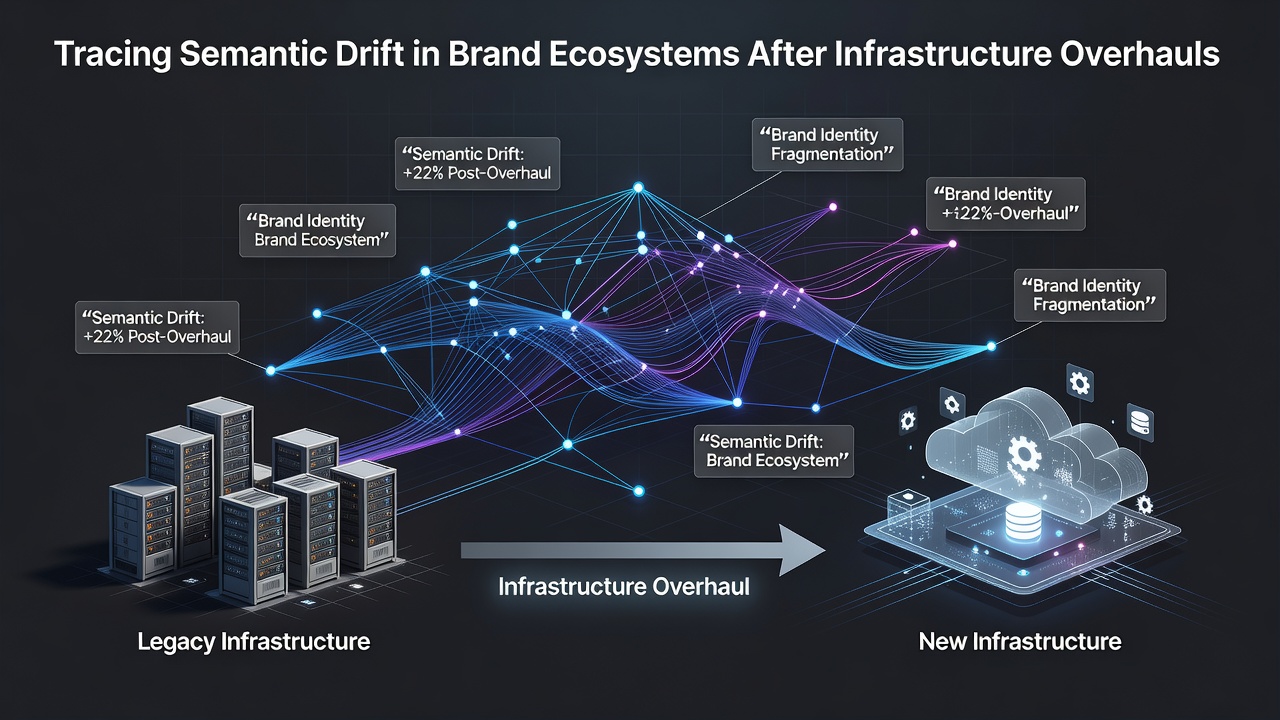
Organizations frequently restructure their digital infrastructure through platform migrations, content management system upgrades, and backend overhauls, and these changes can alter how brand-related terms align with user queries and search algorithms over time. Research indicates that semantic drift occurs when the contextual associations surrounding brand keywords evolve due to modifications in site architecture, URL structures, and content hierarchies, which in turn affects how search engines interpret relevance signals. Data from multiple industry analyses shows that such drifts become measurable within three to six months after major transitions, particularly when core pages undergo relocation or consolidation without corresponding semantic mapping updates.
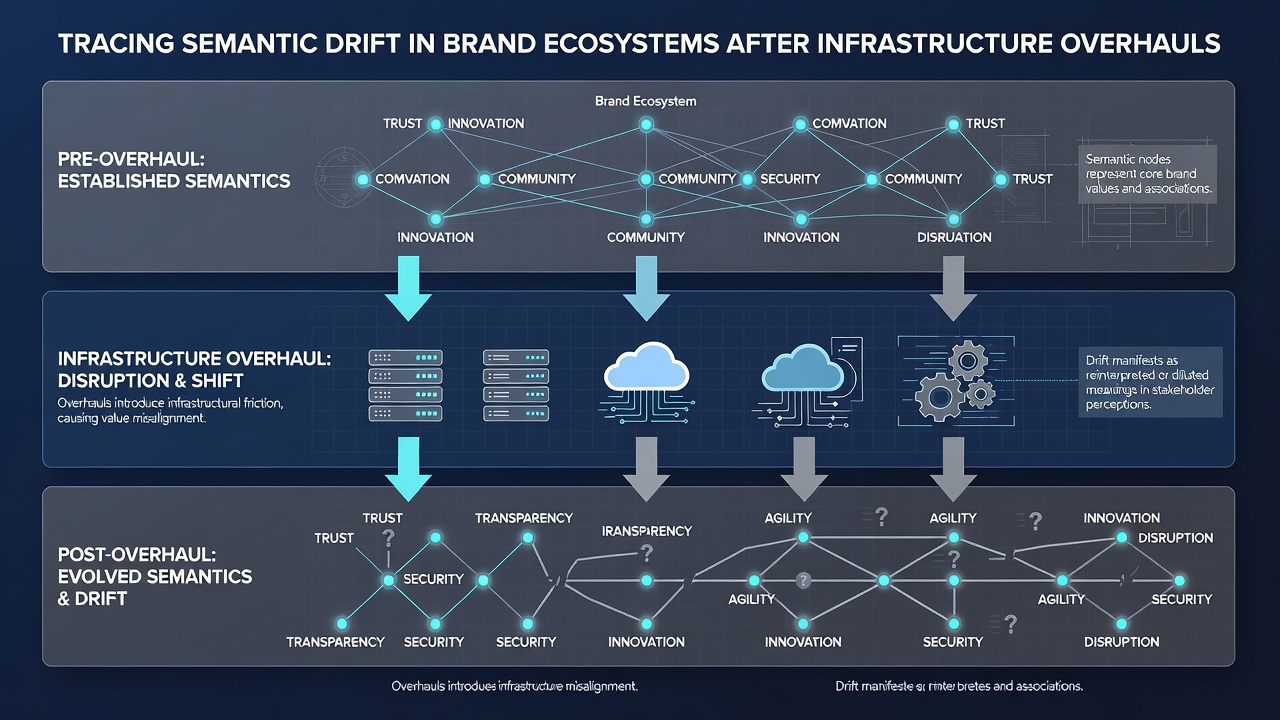
Those who monitor brand ecosystems note that infrastructure overhauls often coincide with shifts in entity recognition, where search platforms begin associating a brand with adjacent but distinct concepts that were previously secondary. In October 2026, reports compiled by the European Commission on digital market dynamics highlighted several cases where large-scale platform transitions led to measurable changes in query intent distribution across consumer-facing domains.
Mechanisms Driving Semantic Changes Post-Overhaul
Platform transitions introduce new variables into how content is indexed and ranked, including alterations to internal linking patterns, schema markup implementations, and crawl prioritization rules that collectively reshape semantic clusters around brand terms. Studies conducted by research institutions in Canada have documented instances where brands experienced a redistribution of topical authority after consolidating product categories under new navigation frameworks, resulting in secondary keywords gaining prominence while primary brand descriptors lost precision. Observers note that these patterns emerge because search algorithms recalibrate entity relationships based on fresh structural signals rather than historical context alone.
What's interesting is how even minor infrastructure adjustments, such as the introduction of new subdomains or API-driven content feeds, can accelerate drift when they disrupt established content hierarchies. Figures from academic analyses reveal that brands maintaining consistent entity references across restructured sections experience slower rates of semantic separation compared to those that fragment their information architecture during overhauls. The reality is that crawl budget allocation plays a direct role here, as engines prioritize newly emphasized pathways and de-emphasize legacy associations that no longer align with updated site graphs.
Measurement Approaches and Data Patterns
Analysts track semantic drift through longitudinal comparisons of search query distributions, entity graph mappings, and co-occurrence frequencies in indexed content before and after infrastructure events. Research from Australian universities on digital branding demonstrates that brands undergoing comprehensive overhauls in 2025 recorded average shifts of 18 to 27 percent in primary keyword intent alignment within the first quarter post-migration. These measurements rely on repeated sampling of SERP features, knowledge panel attributions, and related query expansions that surface new associations not present in prior datasets.
But here's the thing: patterns vary significantly by sector and scale, with consumer goods brands showing faster drift in lifestyle-related semantics while technology brands exhibit changes concentrated around product feature terminology. Data compiled by the U.S. Federal Trade Commission on digital marketplace transparency indicates that transparent communication of structural changes to users correlates with reduced variance in brand perception metrics during transition periods. Experts have observed that regular auditing of semantic signals through structured data validation and query log analysis helps identify emerging drifts before they compound across multiple search verticals.
Case Examples from Recent Transitions
Take one multinational retailer that completed a full backend migration in early 2026 and subsequently recorded a redistribution of brand queries toward service-related terms that had previously ranked as secondary. Researchers discovered through post-migration analysis that changes in faceted navigation and filter implementations redirected internal link equity toward previously under-indexed category pages, which altered the dominant semantic profile attached to the core brand entity. Another documented case involved a financial services provider whose infrastructure overhaul incorporated new compliance layers that affected content freshness signals, leading to gradual incorporation of regulatory terminology into brand-associated search clusters.
People who've examined these transitions find that proactive semantic mapping during the planning phase reduces the extent of unintended drift, although complete elimination remains uncommon across large ecosystems. Evidence suggests that brands integrating cross-functional teams for ongoing semantic monitoring achieve more stable alignment between infrastructure changes and established brand positioning.
Conclusion
Infrastructure overhauls continue to influence semantic stability in brand ecosystems through structural, algorithmic, and content-related pathways that researchers continue to quantify across multiple markets. Organizations that implement systematic tracking of entity relationships and query distributions during and after such transitions maintain clearer visibility into how their brand semantics evolve. Data patterns from 2026 underscore the value of coordinated approaches that address both technical migration requirements and ongoing semantic alignment needs.